
A Practical Guide to Planning ...
A multi-country event can expand a community and create valuable regional partnerships, but copying ...

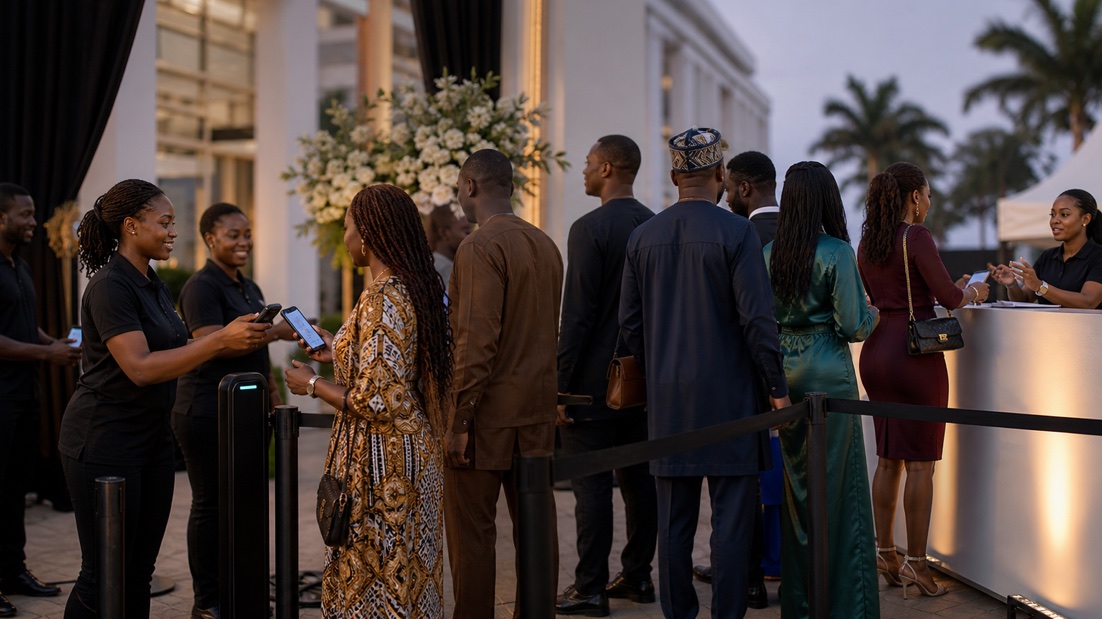
Check-in is the first operational promise an attendee experiences. A confusing queue can undo weeks of positive marketing, while a calm and well-signposted entrance builds confidence before the programme begins.
Map the path from arrival to entry. Separate bag checks, ticket questions, payment issues, accreditation and QR scanning where volume requires it. Guests with a valid ticket should not wait behind people who need complex support.
Use expected arrivals by time, not total attendance alone. If most guests arrive in a 30-minute window, test how many scans each lane can complete while handling screen brightness, damaged phones and questions. Add capacity for peaks rather than relying on a perfect average.
Charge every device, update the scanner, select the correct event and test valid and already-used tickets. Provide power banks, screen protection and secure device handling. Confirm mobile data and venue Wi-Fi from the actual entrance area.
Do not improvise after the network fails. Keep a securely handled attendee export available to authorised supervisors, define how offline admissions are recorded and reconcile them afterward. Protect attendee information and destroy unnecessary printed copies securely.
A duplicate result does not automatically prove fraud; a group member may have presented the same booking first. Move the case away from the active lane, verify identity and booking information, and let a supervisor decide according to the organiser’s written policy.
Compare attendance with registrations, record unresolved incidents and collect devices. Review busiest arrival periods and average queue issues with the team. These notes should shape the entrance plan for the next edition.
Fast check-in is the result of clear roles, tested tools and respectful exception handling. QR tickets help, but the operating plan makes the experience work.
Before the team books suppliers or publishes another campaign, reduce the strategy to a one-page brief. State the audience, the problem the event solves, the experience promised, the commercial objective and the decisions that must remain consistent. For this subject, the practical lens is a Nigerian entrance plan that separates fast QR validation from exceptions and continues safely during connectivity problems. That sentence should be specific enough for a producer, marketer and finance lead to make compatible choices without waiting for the founder to settle every detail.
Add evidence beside every important assumption. Evidence may come from previous sales, audience interviews, venue quotes, payment reports or a small test campaign. Mark anything that is still a guess. This distinction prevents confident presentation from being mistaken for certainty and gives the team a useful list of questions to answer before more money is committed.
Consider a 1,000-person concert opening several scan lanes, a clearly signed resolution desk and a supervisor-controlled offline attendance record. The team should write down what must be standardised and what must remain flexible. The event name, value promise, ticket rules and service standard may need consistency; timing, directions, partners, payment choices and guest communication may require local adjustment. The goal is not to make operations complicated. It is to remove the hidden assumptions that usually become urgent problems close to the event date.
Assign one accountable owner to each decision, with a deadline and the evidence required for approval. “Marketing team” is not an owner; a named role is. “Soon” is not a deadline; use a date linked to the public launch, supplier deposit or refund boundary. A short weekly review should focus on decisions that changed, risks that increased and work that is now blocking sales or delivery.
Read the plan from the attendee’s point of view. A potential guest first encounters a recommendation, post or search result. They need to understand the experience quickly, trust the organiser, see the correct date and full location, choose a suitable ticket, pay successfully and receive a confirmation they can find later. On event day they need directions, a calm entrance and help when something is unusual. Afterward they need any promised materials, refund communication and a clear route to the organiser’s next event.
Walk through that journey on a typical mobile phone and on an average connection. Ask a colleague who did not build the event to try it without coaching. Record where they hesitate, what they misunderstand and which information they search for. Fixing these points often improves conversion more reliably than adding another promotional post.
For every risk, agree an early warning sign and a response. If sales are below the cautious scenario by a defined date, the response might be to adjust production scope, strengthen partner distribution or delay a discretionary commitment. If payment failures increase, the response should identify who checks provider status, who contacts affected customers and when a booking can be considered confirmed. Written thresholds make the team faster without encouraging panic.
Days 1–5: validate the audience, objective, economics and owner for each workstream. Confirm which facts must be visible on the event page. Days 6–12: secure essential partners, test the booking journey and prepare launch assets in the formats each channel needs. Days 13–21: publish, monitor real behaviour and resolve the largest source of hesitation. Days 22–30: focus communication on proven value, brief the delivery team and close operational gaps rather than making last-minute cosmetic changes.
The exact calendar will change with event scale, but the sequence matters: validate before committing, test before promoting heavily, and brief people before the audience arrives. Longer events can repeat the rhythm in monthly cycles. Shorter events can compress it into weekly reviews while keeping the same decision order.
Choose a small group of measures that can change a decision. Give every metric a definition and source so the team does not compare incompatible numbers. Page views may describe attention; completed paid orders describe demand. Registrations describe intention; scanned tickets describe attendance. Gross sales are not the same as settled revenue after refunds, fees and applicable deductions.
Within a few days of delivery, hold a short review with the people closest to sales, customer support, production and the entrance. Record what happened, why it happened and what the next edition will do differently. Save the final brief, supplier notes and performance snapshot in one place. The real advantage of a well-run event is not only the result on one date—it is the quality of the system the organiser can reuse.
Use this checklist as a decision gate, not paperwork. If an answer is unclear, decide who will resolve it and by when. Clear information, locally informed choices and disciplined follow-through are what turn a promising event idea into an experience people trust, attend and recommend.

A multi-country event can expand a community and create valuable regional partnerships, but copying ...
A useful event budget is a decision tool, not a list created after suppliers have already been booke...